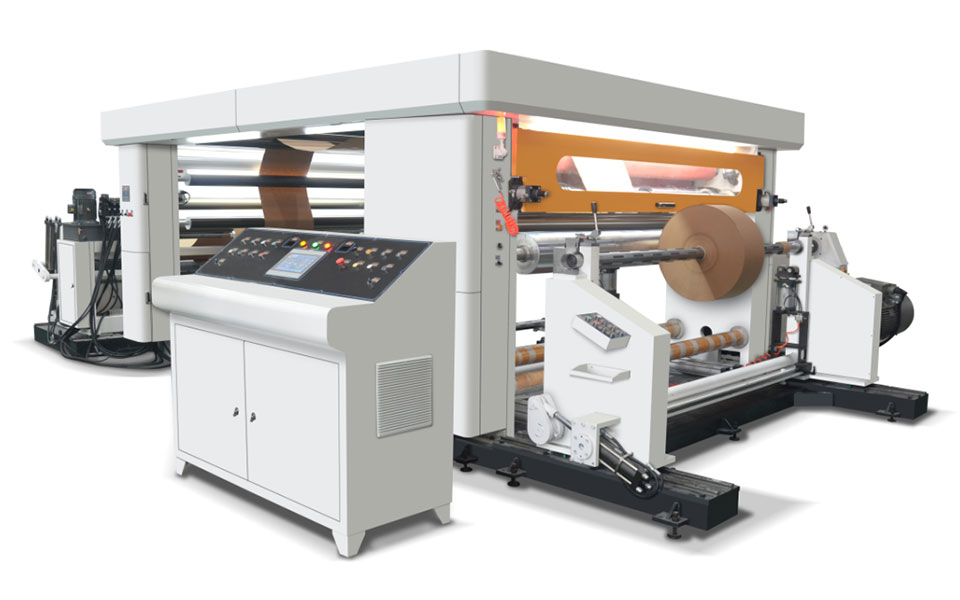
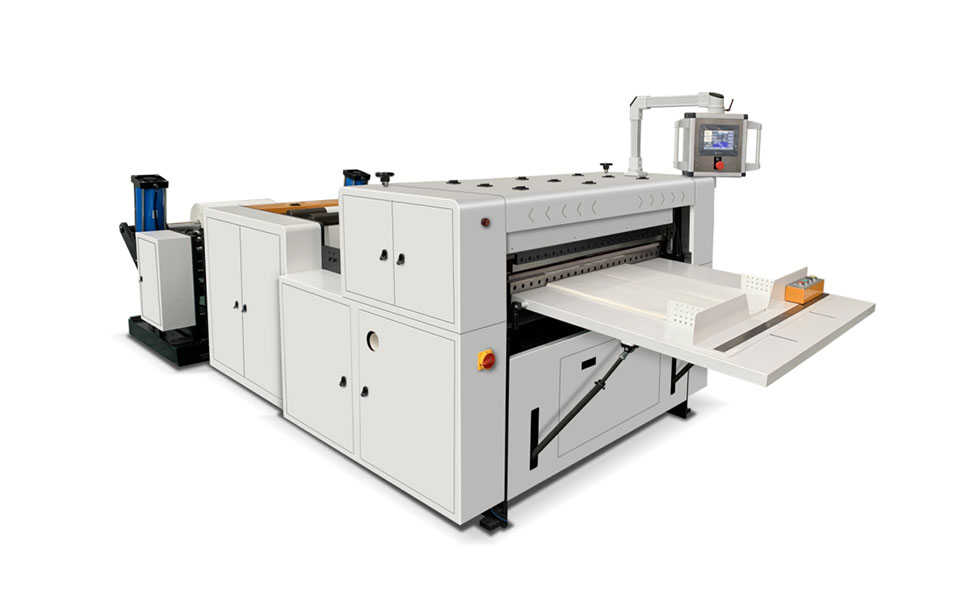
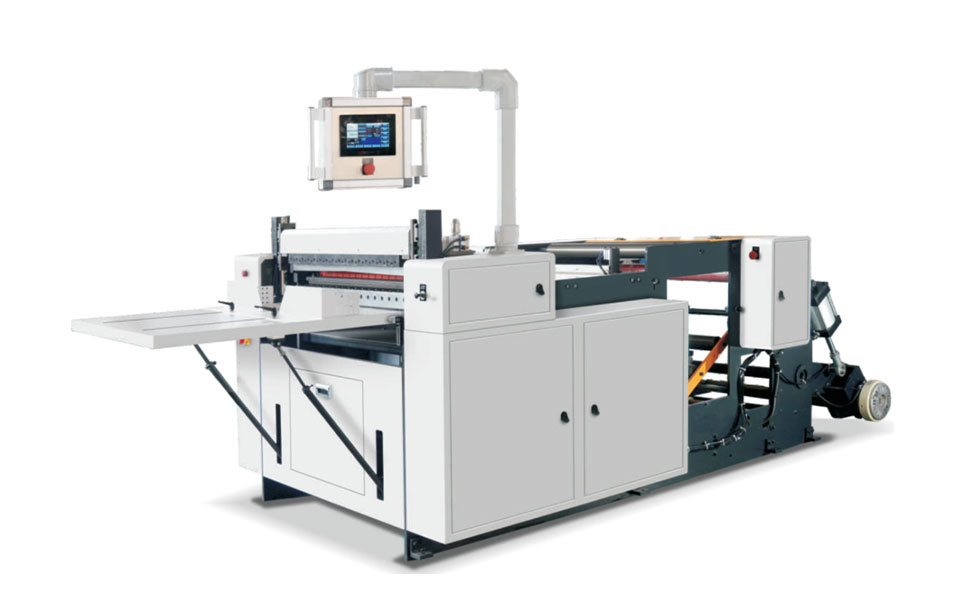
A slitter (or slitting) machine is an industrial cutting device used to cut wide master rolls of material (paper, film, foil, textiles, etc.) into narrower strips. These machines typically integrate three stages – unwinding, slitting, and rewinding – into one automated system. A slitter machine “cuts or slits large rolls of material…into narrower strips” while simultaneously rewinding the cut strips onto smaller cores. This high-speed, precise operation yields clean, uniform rolls ready for packaging or further processing. In fact, slitting machines are considered “critical assets” in industries requiring precision cutting of materials into smaller rolls.
A slitting rewinding machine is composed of three main sections – the Unwind Section, the Slitting Section, and the Rewind Section. Each section has specific components:
Unwind Section: Holds the large parent roll and feeds material into the machine. Key parts include the unwind stand (supports heavy rolls), tension control system (maintains consistent web tension to prevent wrinkles), and edge guide (keeps the web aligned). Some machines use shaftless unwind stands for quick roll changes.
Slitting Section: Contains the cutting tools. This typically includes precision blades or knives (rotary shear blades, razor blades, or crush cutters) mounted on knife holders, along with mechanisms for precise blade positioning. These blades slice the running web to the desired widths. Advanced slitters may have automatic blade positioning to quickly adjust for different widths.
Rewind Section: Rewinds the slit strips onto new cores, forming the finished rolls. Important components are the rewind shafts (holding the cores), tension regulators (ensuring even winding), and often a turret mechanism (rotating shafts) for continuous operation. Lay-on rollers may be used to apply even pressure for smooth, wrinkle-free rolls. Together, these sections coordinate to ensure uniform rolls and high-quality cuts.
The slitting process starts by mounting a master roll on the unwind stand and applying the correct tension. The material is unrolled and fed into the slitting section under controlled tension. In the slitting section, precision blades cut the moving web into the target widths. Depending on the material, the machine might use razor blades, rotary shear blades, or crush cutters. Once slit, the narrow strips are guided through spreader rollers (to prevent tangling) and then rewound onto individual cores in the rewind section. This continuous unwind-slit-rewind sequence allows high-speed production while maintaining precise slit widths and clean edges. As one source notes, modern slitter-rewinders “combine unwinding, slitting, and rewinding into a high-speed and precise operation” to maximize efficiency.
Log Slitters: These machines cut an entire roll (the “log”) in one action without unwinding it first. A circular blade plunges into the rotating log to slice it into smaller rolls. Log slitters are fast and simple, making them ideal for materials like adhesive tapes or foam rolls. However, they offer less precise width control compared to rewind slitters.
Rewind Slitters (Slitter-Rewinders): The most common type, these machines unwind the master roll, slit it, and rewind the strips. They offer high accuracy and flexibility across a range of materials (from thin films to heavy foils). With tension control and precision blades, rewind slitters maintain consistent width and edge quality.
Simplex and Duplex Slitters: Simplex (single-shaft) slitters wind all slit strips onto one shaft at a time, whereas duplex slitters have two shafts, allowing simultaneous winding of multiple rolls. Duplex designs provide higher throughput and better tension control for delicate materials.
Turret Slitters: These are a type of duplex slitter with a rotating turret head. They have multiple rewind shafts (usually four) that quickly rotate as finished rolls are removed and new cores loaded. Turret slitters enable continuous operation with minimal downtime, which is ideal for high-volume production environments.
Choosing the right slitting rewinding machine depends on your materials, volume, and required precision. Consider factors such as the type and thickness of material, roll width and diameter, desired slit widths, and production speed. Ensure the machine can handle your specific materials (paper, film, foil, etc.) and desired output size.
Material & Output Requirements: Match the machine’s capabilities to your production needs. For example, if you process very thin films, you’ll need tight tension control. If your output includes large rolls, ensure the machine can accommodate the roll diameter and core size.
Automation and Controls: Modern slitters offer advanced automation to enhance precision. Look for features like automated blade positioning and computer-controlled tension systems. These reduce manual setup time and improve cut consistency. Automated error detection and safety systems further protect quality and operators.
Unwind Configuration: Decide between shafted or shaftless unwind stands. Shafted unwinds mount rolls on removable shafts – good for high-stability on heavy rolls. Shaftless unwinds clamp the roll shell directly, allowing faster roll changes and accommodating varying roll sizes easily. Choose what fits your workflow.
Rewind Setup: Consider if you need single (simplex) or dual (duplex) rewinding. Duplex slitters (especially turret models) allow uninterrupted production by swapping roll pairs on the fly. For simpler operations, a simplex slitter may suffice. Also think about winding method (center vs. surface winding) based on material stretchability.
For businesses with unique requirements, custom-built solutions are available. Hongke Slitting Rewinding Machine is a leading manufacturer of slitter-rewinders with over 20 years of industry experience. They specialize in tailored slitting and cutting machines, ensuring each unit meets the customer’s exact production needs. Hongke emphasizes precision in manufacturing—each machine is precision-tested for stability and longevity. These CE-certified machines have been exported to 100+ countries, serving industries from packaging to printing. By choosing a custom solution from Hongke, you can get a slitting machine perfectly suited to your material types, widths, and automation requirements.
Regular maintenance is critical to keep a slitter running smoothly and to extend its service life. Key maintenance tips include:
Clean and Lubricate: Remove dust and debris from the machine regularly, and apply lubricant to bearings and moving parts as recommended. This reduces wear and prevents component failure.
Tension Control & Alignment: Periodically check the tension system and edge guides to ensure the web remains aligned. Misalignment or slack can lead to uneven cuts and wasted material.
Blade Sharpness: Inspect blades or knives often. Dull blades make ragged cuts and strain the machine. Sharpen or replace cutting blades when needed to ensure clean, precise slits.
Following these practices helps maintain product quality, minimize downtime, and reduce repair costs.
Even well-maintained slitters can encounter issues. Here are common problems and fixes:
Uneven Cuts: Often caused by dull or misaligned blades or incorrect tension. Solution: realign or replace blades and calibrate tension to eliminate material wandering.
Poor Slit Quality: Usually due to insufficient blade pressure or wrong slitting method. Solution: Increase blade pressure to optimal levels and ensure you’re using the appropriate slitting technique.
Web Wrinkling or Curling: Typically from improper tension or a mis-centered roll. Solution: Adjust tension settings, center the master roll, and confirm the unwind shaft is gripping correctly.
Material Breakage: Caused by excessive tension or chipped blades. Solution: Reduce tension to prevent tearing and replace any damaged blades.
Loose or Inconsistent Rolls: If slit rolls are not tight, check the tension control and diameter sensors. Recalibrate sensors and inflate air shafts fully. Proper tension during rewind ensures evenly wound, firm rolls.
A slitting rewinding machine is a vital tool for any manufacturer that needs to turn large rolls of substrate into precise, narrower rolls. By understanding its components (unwind, slitting, rewind) and operating principles, businesses can choose the right machine and use it effectively. Proper selection, combined with diligent maintenance and troubleshooting, ensures high-quality, high-speed slitting performance. Whether opting for a standard model or a custom solution from a specialist like Hongke, the key is aligning the machine’s capabilities with your production needs. As one source notes, “choosing the right slitting method” and machine leads to enhanced productivity and better product quality. With the right slitter, your operation will be equipped for efficient, precision cutting of materials at scale.
1. What factors affect the quality of slitting cuts?
Blade sharpness and web tension are crucial. Sharp blades and steady tension produce clean, burr-free edges. The material’s thickness and stiffness also play a role; tougher substrates often need shear slitting rather than razoring.
2. How can slitting efficiency and precision be improved?
Proper machine setup is key. Adjust blade alignment and tension for your material. Incorporating automation (like PLC controls and real-time monitoring) ensures consistent parameters. Regular maintenance and operator training also help keep operations smooth.
3. Can a slitting machine handle multiple layers at once?
Yes, depending on design. Many slitters (especially shear or crush slitting machines) can cut through multi-layer webs. However, the tension and alignment systems must be properly adjusted for the extra layers.
4. Can a slitting machine be customized for special applications?
Absolutely. Leading manufacturers like Hongke specialize in custom-built slitters. Whether you need to process unusual materials, work with non-standard web widths, or add advanced automation, a tailored machine can meet those needs while boosting efficiency.

GET A QUOTE




 English
 Chinese
 Pусский
 Türkçe
 Deutsch
 Español