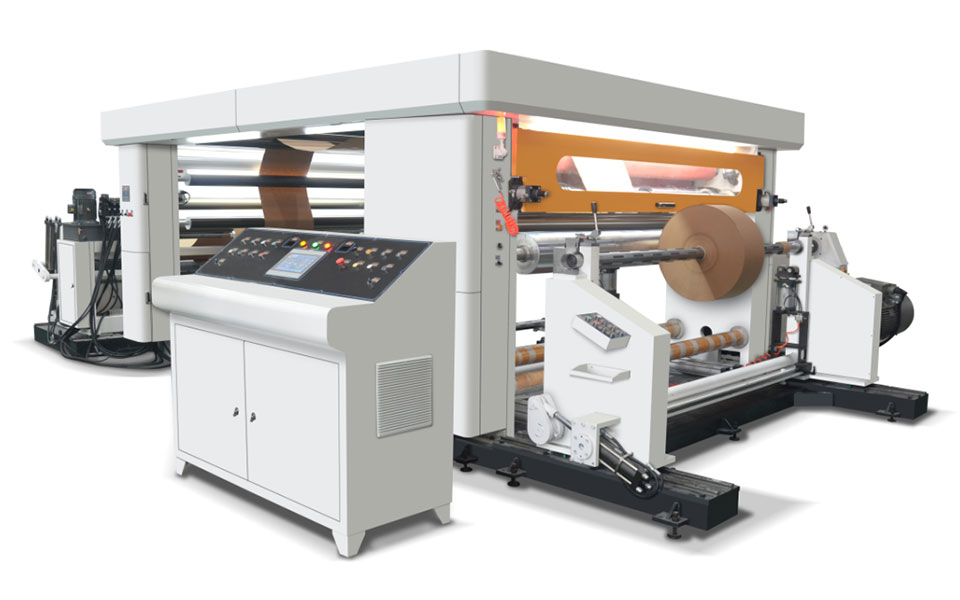
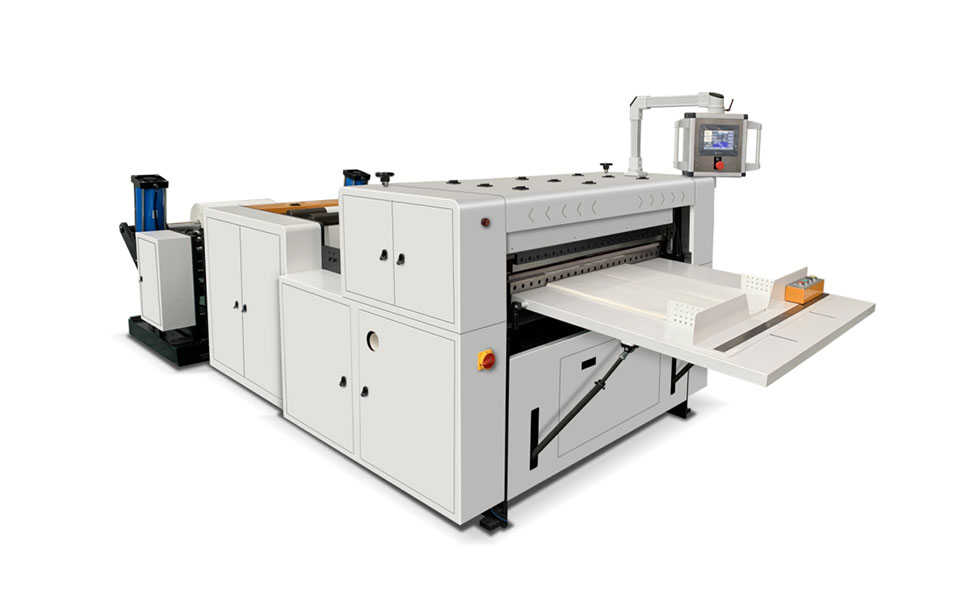
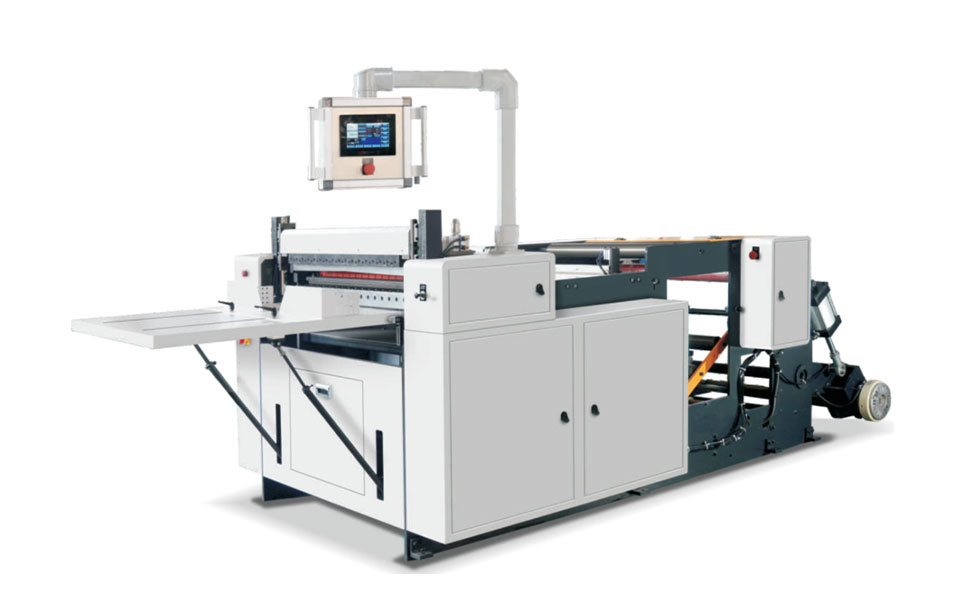
In the vast landscape of converting and packaging industries, efficiency and precision in handling roll materials are paramount. The Paper Slitting Rewinding Machine stands as a cornerstone technology, transforming large, master rolls into narrower, ready-to-use rolls with exacting dimensions. Its versatility extends far beyond paper to films, foils, labels, and textiles, making it an indispensable asset. This article explores the multifaceted world of slitter rewinders by examining their core function and breaking down their various classifications based on method, structure, application, and automation.
A Paper Slitting Rewinding Machine, commonly known as a slitter rewinder, is an industrial device designed to longitudinally slit (cut) a wide web of material into multiple narrower strips and rewind them into individual, tightly wound rolls. Functioning as a "precision tailor," it processes master rolls of raw materials—such as paper, plastic films, metal foils, adhesives, and non-wovens—into specific widths and lengths required for downstream production or end-use. This machine is critical for enhancing productivity, reducing waste, and enabling customized material formats in industries like printing, flexible packaging, label manufacturing, and textile processing.
Based on the cutting mechanism, paper slitting rewinding machines can be classified into:
Razor Slitting: Uses blades pressed against a hardened roller; suitable for thin and soft paper materials.
Shear Slitting: Employs a male and female blade system; ideal for thicker paper with high precision requirements.
Crush Slitting: Cuts material by pressing a circular blade against an anvil; commonly used for low-cost and high-speed applications.
According to structural design and rewinding configuration, machines include:
Center Winding Type: Rewinds rolls from the core center; suitable for light to medium materials.
Surface Winding Type: Rewinds through surface contact; ideal for thicker or harder paper.
Center-Surface Combination Type: Combines both methods for better tension control.
Single-Shaft and Dual-Shaft Models: Chosen based on production volume and roll change efficiency.
Different paper types require specific machine configurations:
Printing Paper Slitters: Designed for coated and uncoated printing paper.
Packaging Paper Slitters: Used for kraft paper, corrugated paper, and wrapping paper.
Label and Specialty Paper Slitters: Suitable for thermal paper, release paper, and laminated materials.
Tissue and Lightweight Paper Slitters: Optimized for soft and thin paper grades.
By automation capability, paper slitting rewinding machines are divided into:
Manual and Semi-Automatic Machines: Suitable for small-scale or customized production.
Fully Automatic Machines: Feature automatic loading, slitting positioning, tension control, and roll unloading for high-efficiency production.
Smart/PLC-Controlled Machines: Integrated with touchscreen interfaces and intelligent monitoring systems.
Paper slitting rewinding machines can be classified by slitting method, machine structure, application material, and automation level. Understanding these classifications helps manufacturers select the most suitable machine to achieve optimal cutting accuracy, productivity, and cost efficiency.
Q1: Which slitting method is best for thick paper?
A: Shear slitting is generally preferred for thick or high-density paper due to its clean and precise cutting performance.
Q2: What type of rewinding structure offers better tension control?
A: Center-surface combination winding provides more stable tension control across different paper thicknesses.
Q3: Are fully automatic slitting rewinding machines suitable for small factories?
A: Yes, if production volume and budget allow, fully automatic machines can significantly reduce labor costs and improve consistency.
Q4: Can one machine handle multiple paper materials?
A: Many modern machines are designed with adjustable settings to process various paper types, though optimal performance depends on proper configuration.

GET A QUOTE




 English
 Chinese
 Pусский
 Türkçe
 Deutsch
 Español