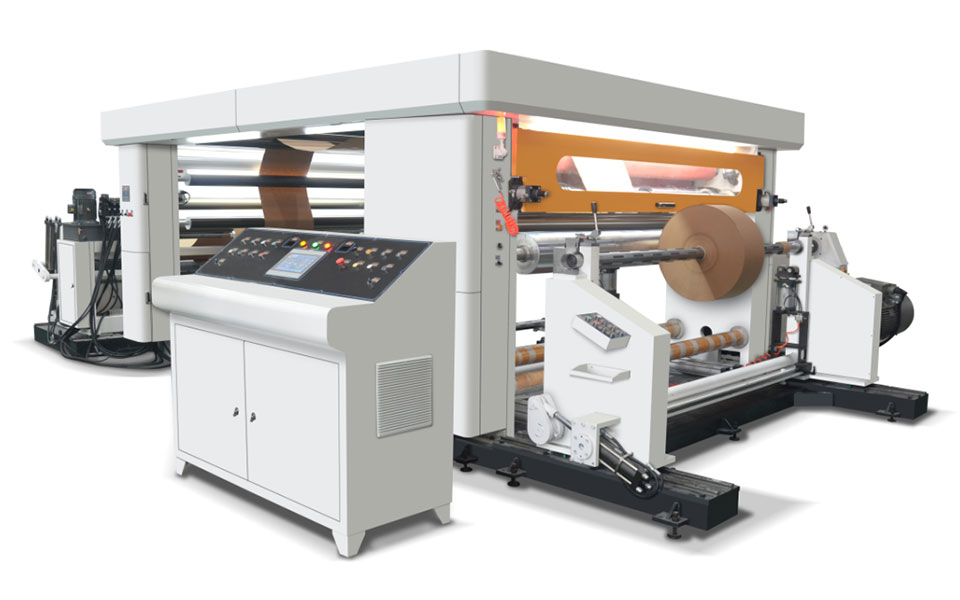
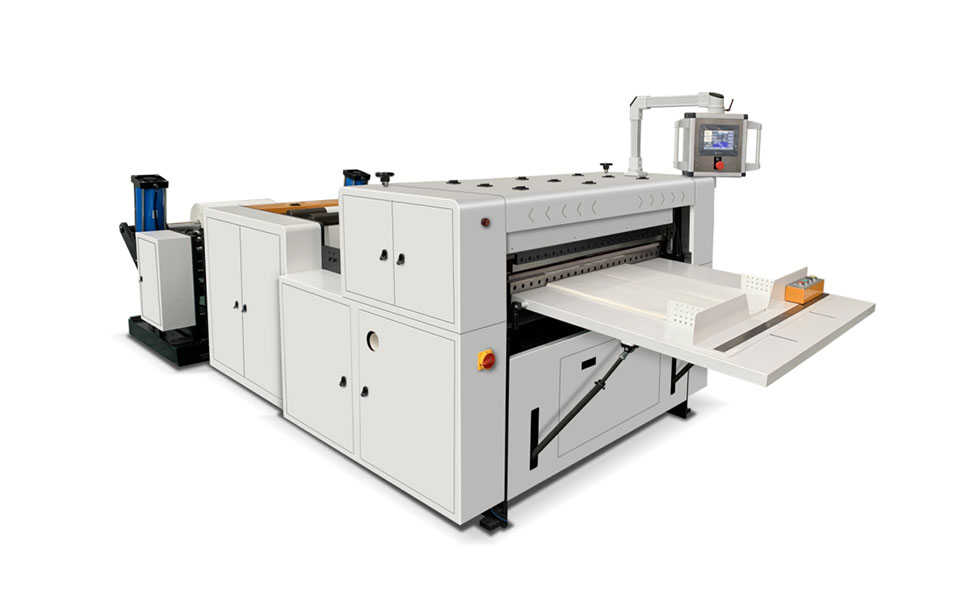
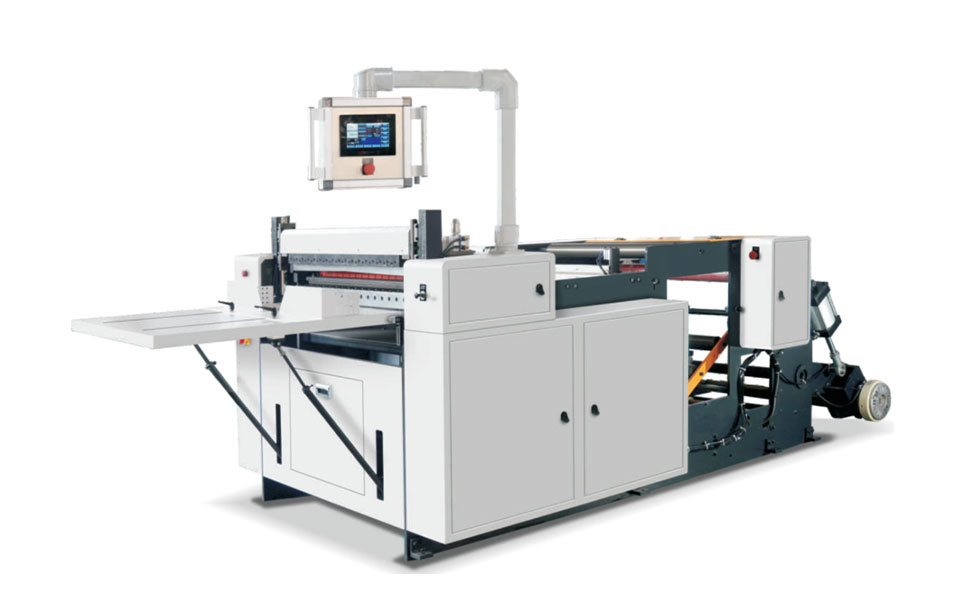
A high-speed paper roll to sheet cutting machine is a specialized industrial equipment designed to convert large paper rolls into individual flat sheets with high efficiency and precision. In the paper processing industry, where large-volume and fast-paced production is essential, this machine plays a crucial role. It bridges the gap between paper roll production and the subsequent use of paper sheets in various applications, ensuring that the conversion process is not only rapid but also accurate, meeting the strict quality requirements of different industries.
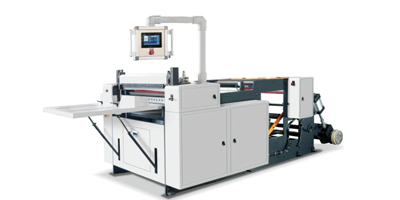
The conversion process of a paper roll to sheet cutting machine follows a streamlined, step-by-step workflow, with each stage optimized for smooth operation and precise results. Below is a detailed breakdown of its working mechanism:
The process starts with the unwinding unit. A large paper roll is mounted on the unwinding stand, which is equipped with tension control devices. These devices ensure that the paper is unwound at a consistent speed and with stable tension, preventing the paper from being stretched or wrinkled. The tension control is crucial as any inconsistency can affect the accuracy of the subsequent cutting step.
After unwinding, the paper web is fed into the machine through a series of guide rollers. These guide rollers help to keep the paper web aligned and flat, ensuring that it moves smoothly towards the cutting mechanism. Some advanced machines may also have correction systems that detect and adjust any lateral deviation of the paper web, further enhancing the alignment accuracy.
Before cutting, the paper web passes through a positioning and measuring system. This system uses sensors and encoders to measure the length of the paper web accurately. The operator can set the desired sheet length on the machine's control panel, and the system will automatically calculate the number of rotations or the distance the paper needs to move to reach the set length. This step is vital for ensuring that each sheet has the exact dimensions required.
Once the paper web is positioned correctly, it moves to the cutting mechanism. The cutting unit typically consists of a rotating knife and a fixed anvil or two rotating knives that work together. For high-speed machines, the cutting mechanism is designed to operate at extremely fast speeds without compromising the cutting quality. The knives are made of high-hardness materials to ensure sharpness and durability, allowing for clean and smooth cuts even at high production rates.
After cutting, the individual paper sheets are conveyed to the collecting unit. This unit can be a stacking mechanism that stacks the sheets neatly in a pile, or a conveying system that transports the sheets to the next processing stage, such as printing, packaging, or further finishing. The collecting unit is designed to handle the high speed of the machine, ensuring that the sheets are not damaged or misaligned during collection.
High Speed: A core advantage, modern models reach cutting speeds of several hundred meters per minute, producing thousands of sheets hourly. This boosts production efficiency drastically, ideal for large-scale manufacturing.
Precision Cutting: Equipped with advanced cutting and measurement systems, accuracy is maintained within ±0.1mm or smaller. Uniform sheet dimensions are ensured, critical for applications like printing that demand consistent registration.
Automation and Intelligence: PLC control systems and HMIs enable easy parameter setting (sheet length, speed, quantity). Automatic roll change reduces downtime, while fault diagnosis/alarm systems facilitate quick issue resolution.
Wide Adaptability: Handles diverse paper types (tissue, printing paper, cardboard, specialty papers) by adjusting unwinding tension, feeding speed, and cutting pressure, making it versatile in the paper industry.
Safety and Reliability: Features emergency stops, safety guards, and photoelectric sensors for operator protection. High-quality components and robust structures ensure long-term, low-maintenance operation.
Thanks to its efficiency and precision, the high-speed paper roll to sheet cutting machine is widely applied across multiple industries. Here are its key application areas:
Printing Industry: This is one of the largest application areas. The machine converts large rolls of printing paper (such as offset paper, coated paper, and newsprint) into sheets of standard sizes (A4, A3, etc.) or custom sizes required for printing books, magazines, brochures, flyers, and other printed materials. The high speed and precision of the machine ensure that the printing process can keep up with the demand for large-volume printed products.
Packaging Industry: In the packaging industry, the machine is used to cut paper rolls into sheets for making various packaging materials, such as cardboard boxes, cartons, paper bags, and labels. It can handle thick cardboard and specialty packaging papers, providing the necessary sheet materials for the packaging production line. The accurate cutting ensures that the packaging materials have consistent dimensions, which is important for the assembly and sealing of packages.
Office Paper Production: The production of office papers, such as copy paper and printer paper, relies heavily on high-speed paper roll to sheet cutting machines. These machines convert large paper rolls into the standard office paper sizes that are widely used in offices, schools, and homes. The high production capacity of the machines meets the huge demand for office paper globally.
Tissue and Hygiene Products Industry: Although tissue products are often in roll form, some tissue products, such as facial tissues and napkins, are in sheet form. The machine is used to cut large rolls of tissue paper into individual sheets, which are then folded and packaged. The machine's ability to handle thin and delicate tissue paper without damaging it is crucial in this application.
Specialty Paper Applications: Specialty papers, such as thermal paper, label paper, and photographic paper, also require conversion from rolls to sheets. The high-speed cutting machine can handle these specialty papers with precision, ensuring that their unique properties (such as thermal sensitivity or surface coating) are not affected during the cutting process. These sheeted specialty papers are used in various applications, including thermal printing, labeling, and photography.
The high-speed paper roll to sheet cutting machine is an indispensable piece of equipment in the paper processing industry. Its efficient working principle, combined with key features such as high speed, precision, automation, and adaptability, makes it suitable for a wide range of applications. As the demand for paper products continues to grow, the development of more advanced and efficient high-speed paper roll to sheet cutting machines will further drive the progress of the paper industry.

GET A QUOTE




 English
 Chinese
 Pусский
 Türkçe
 Deutsch
 Español